AI and Data Science for Transport
Robin Lovelace and Chris Rushton
December 1, 2025
Welcome!
AI and Data Science for Transport
1-day course
1st December 2025
Agenda
- 10:00-11:30 Session 1: Foundations of AI and Data Science for Transport in Transport
- 11:30-12:30 Session 2: (AI-Powered) Coding and Development
- 12:30-13:30 Lunch
- 13:30-15:30 Session 3: AI for Transport Data Analysis
- 15:30-17:00 Session 4: Applied AI Session
Prerequisites
To participate
- Computer with internet access
- A willingness to learn and experiment with AI tools
- Basic familiarity with transport planning concepts
- Optional: Experience with coding or data analysis tools
Learn and share
The following will help:
- An interest in transport planning and AI applications
- A willingness to learn and share experiences
- A GitHub account (useful for accessing course materials)
- Openness to trying new AI tools and workflows
Housekeeping
- Gents toilets are on this floor, ladies on ground floor.
- No fire alarm expected.
- Wifi code: enjoyBH1!
- Connect to the Wi-Fi network
- Course materials available online
- Coffee and lunch breaks as scheduled
- Interactive sessions: Please participate and ask questions
Course principles
- “Learn by doing” with AI tools
- “Demystifying AI” for practical use
- “No such thing as a bad question”
- Focus on practical applications
- Real-world transport examples
- Hands-on experience with AI workflows
About the instructors
Robin Lovelace - Professor of Transport Data Science, University of Leeds - Focus on data-driven transport planning and open source tools
Chris Rushton - Transport emissions researcher, data engineer, web developer - Experience in practical AI applications
About you
Quick introductions:
- Name and organisation
- Current role in transport
- Experience with AI tools (if any)
- What you hope to gain from today
Session 1: Foundations of AI and Data Science for Transport in Transport
Key topics:
- What is AI and how does it apply to transport?
- Overview of AI tools and techniques
- Real-world transport applications
- Ethical considerations
See: Session 1 materials
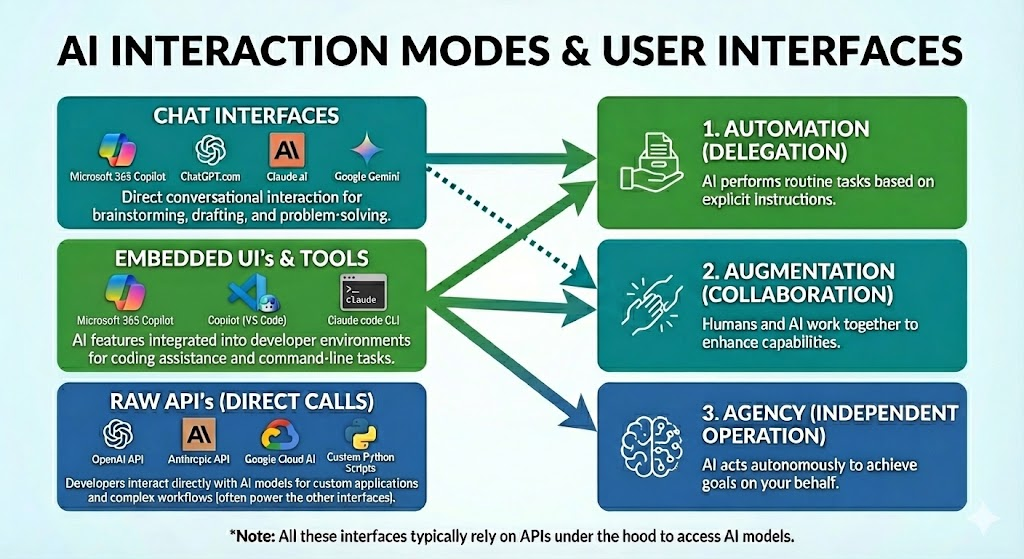
Different ways to use AI
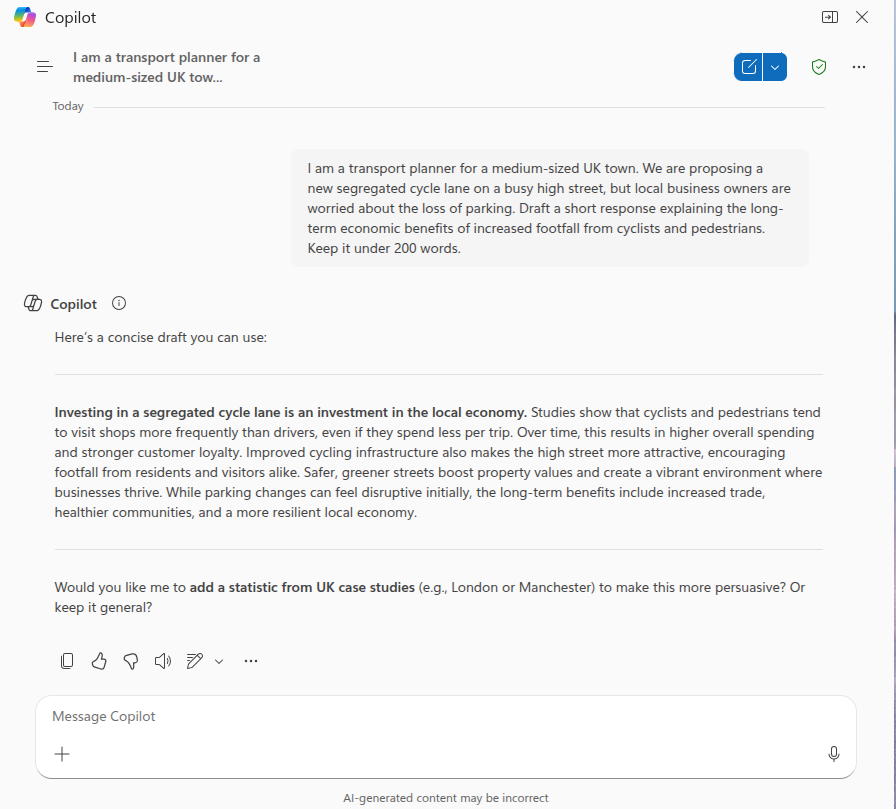
Example output from Microsoft 365 Copilot
![]()
Microsoft 365 Copilot vs. GitHub Copilot
Microsoft 365 Copilot has limited coding capabilities compared to GitHub Copilot in VS Code. M365 Copilot is primarily designed for productivity tasks (emails, documents, data analysis), not software development.
![]()
Session 2: (AI-Powered) Coding and Development
Key topics:
- AI coding assistants (GitHub Copilot, etc.)
- Efficient AI-assisted workflows
- Live coding demonstrations
- Hands-on practice
See: Session 2 materials
Lunch Break (12:30-13:30)
Session 3: AI for Transport Data Analysis
Key topics:
- Finding, cleaning, and visualizing transport data with AI
- Exploratory Data Analysis (EDA) and interpretation
- Note: Originally planned to focus on document analysis. That advanced content is now in Session 3 Advanced, but we expect most to focus on this updated data analysis session.
See: Session 3 materials
Session 4: Applied AI Session
Key topics:
- Hands-on application of AI tools
- Working with your own datasets and problems
- Instructor support and peer collaboration
- Show and tell
See: Session 4 materials
![]()
Course wrap-up
Key takeaways:
- AI as a tool to enhance transport planning
- Practical skills for immediate application
- Resources for continued learning
- Building AI into your workflow
Next steps:
- Try the tools in your own work
- Join the community discussions
- Share your experiences and learn from others
Thank you!
Questions? Discussion?
Course materials: Available online Community: GitHub Discussions